
Carroll County Arrest Warrants Explained
Maryland lays out the path in plain terms. Police can file charges directly, or a private complainant can go to a District Court commissioner. The commissioner reads the application and the statement of probable cause, then picks one of two documents: a summons or an arrest warrant. Within the District Court, a judge or commissioner signs the warrant. A Circuit Court judge signs warrants in that court, and a clerk may sign when a recorded order directs issuance. Carroll County follows this same structure, and it is why a Carroll County police department is never the issuing authority, even when one of its officers wrote the charge. That distinction tells you which clerk to call with your question.
How a Carroll County Commissioner Decides Summons or Arrest
The commissioner station sits at 101 N. Court Street Rear in Westminster, and its number is 410-871-3520. It runs around the clock. A commissioner reads the statement of charges, weighs the probable-cause showing, and chooses the paper: a summons directs an appearance, while a warrant commands an arrest. A summons means notice and a court date. A warrant sits open until an officer finds the person, and it can wait a long time. That difference shapes everything after a Carroll County filing.
Note: A commissioner also conducts initial appearances and sets release conditions after an arrest, which is a separate function from the charging decision.
Inside a Carroll County Arrest Warrant
Two records describe one Carroll County warrant. The court file holds the judicial side; the agency record holds the service side.
| Charging Document | The type of charging paper that began the case |
|---|---|
| Source Agency and Court | The department that filed and the court that issued |
| Case and Police Numbers | A case number from the court and a police case number from the agency |
| Offense | The charge, its statute, and its classification |
| Issuing Authority | The judge or commissioner who authorized the warrant |
| Service Fields | Assigned officer, assignment date, and the service or return entry |
| Release Terms | Bond or conditions when a judicial officer has set them |
A public warrant number does not exist. Maryland publishes no separate number for an arrest warrant, so in Carroll County the case number stays the key.
The Westminster Police Records Section Tracking Sheet
Westminster's published arrest-procedure policy shows what a Carroll County municipal agency records when a warrant arrives. The records section takes in warrants from the District Court commissioner or the Circuit Court, opens a tracking sheet, and pushes the paperwork through to a return. That sheet logs a lot. It captures the date and time received, the charging-document type, the source, the document-control or court case number, the defendant-name field, the assigned officer with the assignment date, the court tracking number, and the police department case number. Officers run checks against state and national systems along the way. The policy's offense categories run from felonies and misdemeanors to motor-vehicle charges, bench warrants, and failures to appear. None of this is a public search. It simply tells you what to reference when you call about a Carroll County warrant.
Serving Arrest Warrants in Carroll County
The sheriff's warrant unit finds and arrests people wanted on outstanding warrants. It works for the sheriff's office, allied agencies, and other jurisdictions, and returns fugitives under extradition procedures. Municipal police handle the warrants directed to them. When an arrest turns high-risk, tactical support comes from the sheriff's CRT and SWAT units, which also assist with search warrants. That backing is an execution function, not a separate office you can ring. Which agency serves a given Carroll County warrant depends on where it came from and how service was assigned.
From Warrant Receipt to Carroll County Central Booking
The sheriff's corrections page describes the end of the line. After an arrest in Carroll County, the person goes to the county detention center for central booking. Staff there interview, photograph, fingerprint, and sometimes take DNA, and the records land in the sheriff's system.
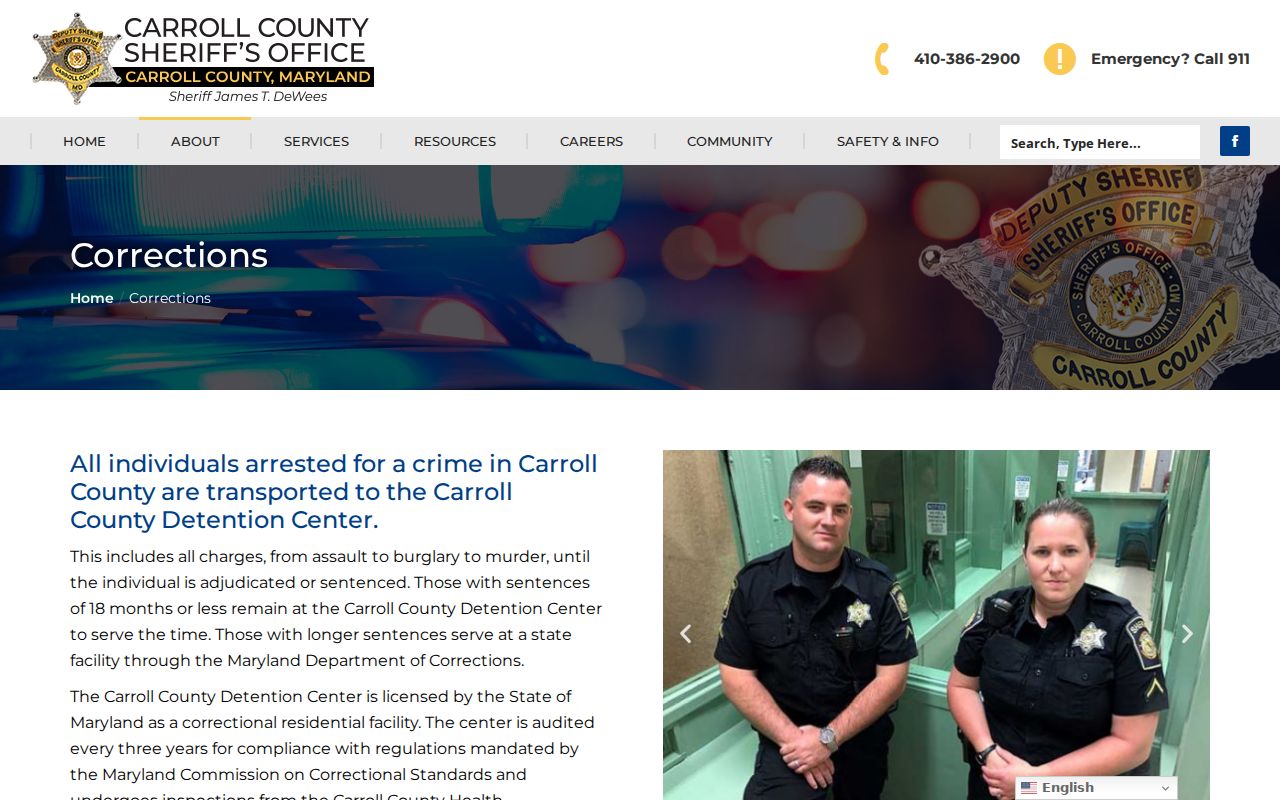
That page walks through the intake step. Next comes a commissioner, who handles the initial appearance and release decision, while pretrial services supervises people released on bail and conditions. No public bond window is posted. Ask before you travel with money.
Comparing Arrest, Summons, and Bench Warrants
Three documents can pull a person into a Maryland courtroom. They differ on one point: whether Carroll County commands an arrest.
| Document | What It Does | How It Starts |
|---|---|---|
| Summons | Directs an appearance without an immediate arrest command | A charging document reviewed by a commissioner or clerk |
| Arrest warrant | Commands a peace officer to arrest the named person | A probable-cause finding in a new case |
| Bench warrant | Commands an arrest after a court event such as a missed date or forfeited bond | A failure to appear, probation issue, contempt, or forfeiture |
| Search warrant | Authorizes a search and seizure of property, not an arrest | A probable-cause showing under Criminal Procedure §1-203 |
Rule 1-202 is the Maryland rule that separates these documents. For the recall side of that process, the bench warrant search page covers Carroll County.
When a Search-Warrant Affidavit Is Sealed
Maryland law lets a judge seal a search-warrant affidavit for up to 30 days. One 30-day extension is allowed, if a continuing investigation justifies it. Then the affidavit is unsealed and delivered under the statute. A sealed affidavit explains one common gap. It says nothing about whether any other Carroll County warrant exists.
Caution: Do not read a missing search-warrant document as proof that no warrant was issued. Ask the court about access limits before drawing a conclusion.
Search warrants also target property, not a person's arrest. So they never show up in a Carroll County self-check on personal warrant status.
Federal Warrants and the Carroll County Line
Carroll County sits inside the District of Maryland for federal matters, and no federal courthouse operates in the county. Federal arrest warrants come through the complaint or indictment process, and federal agents plus the U.S. Marshals Service serve them. A Maryland case search does not cover them.
A federal matter belongs outside any Carroll County warrant lookup. Start with counsel or the federal court itself. The U.S. Marshals Service in Maryland is the right office for a federal warrant question.
If There's an Arrest Warrant for You
Call the issuing court first. Write down what the clerk says the file shows. Then call the Carroll County sheriff's warrant unit at 410-386-2597 and ask how a voluntary surrender should be handled. Bring in a Maryland attorney if the charge is criminal, if bond has been set, or if the court's demands are unclear.
Important: Do not wait for a traffic stop to settle this. Speak with a lawyer about a walk-in appearance, bond, or a motion before you act.
Neither a phone call nor a records request clears a warrant. Only the issuing court can recall or quash it. Carroll County publishes no surrender window or bond schedule, so confirm each step before you act.